There is life after 10: Long term preservation of research data

Towards a Sustainable Data Management Ecosystem

Since the FAIR guiding principles were introduced in 2016, there has been a significant shift in the findability, accessibility, interoperability, and reuse of research data. However, as the ecosystem matures, it is becoming clear that FAIR data is only half the story. To ensure continuity and long-term preservation, we must look beyond initial access.

Why join us?

Despite our shared goals, a gap remains between the data management and repository communities. It is time for these two worlds to embrace one another. At the "There is Life After 10" meeting, we aim to bridge the gap between FAIR and TRUST, ensuring research data remains valuable not just today, but for decades to come.

  • Connect: Meet experts from both the FAIR and TRUST domains.
  • Integrate: Explore how long-term preservation completes the data lifecycle.
  • Collaborate: Help build a unified strategy for the data management ecosystem.

Programme

TimeDescription
09:30 Registration
10:00 Welcome and introduction
10:10 Take 1: Setting the scene 

1. The Digital preservation perspective - Digital Preservation Coalition (DPC)  Digital preservation is constantly in flux, shaped by changing technologies and needs. This presentation offers a snapshot of current shared challenges and emerging priorities, explored through the lens of research data preservation. 

2. The Researcher perspective (ODISSEI) 
To enable the preservation of sensitive research data, the quality of metadata and documentation is of great importance. This presentation is focusing on the researchers perspective regarding the constraints for long-term preservation.
11:00 Coffee break
11:15 Rounds of interactive workshops – connecting the why and the how  1.

1. Trustworthy repositories, where do we meet? (DANS, FIDELIS) 
Repositories have a key role to play in helping make data openly available and FAIR. Researchers rely upon them. But does a trustworthy repository actually do? And what do researchers need to know to make long-term accessibility of data happen? 

2. Jargon buster: FAIR and TRUST languages, how to connect (VU, DPC) 
Are we talking about the same things in different words? This interactive session connects FAIR and TRUST terminologies, mapping overlaps and gaps so we leave with a shared understanding and a practical vocabulary bridge. 

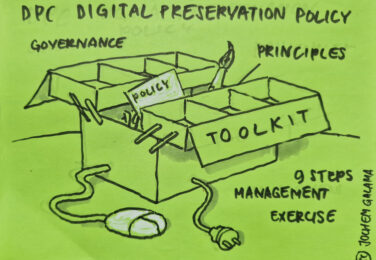
3. Preservation policy toolkit (DPC, LCRDM)
This workshop explores why a clear digital preservation policy matters and what it enables in practice. Using a short case study, we’ll introduce a policy toolkit and show how it can help you draft or strengthen your own.
12:15 Lunch break
13:00 Take 2: Introducing the communities 

1. Research data and digital preservation (TDCC-SSH) 
This session connects research data and digital preservation perspectives on interoperability, reuse, and long-term preservation. Using examples from the SSH domain we’ll explore what interoperability looks like in practice and what’s needed to keep data usable over time.
13:20Rounds of interactive workshops – Lessons learned 

Getting familiar with trustworthy repositories (4TU, DANS) 
This workshop introduces some of the existing trustworthy repositories within the Dutch research landscape. Who are they and how are they interacting with researchers and with other repositories? 

Practical consequences for researchers (ODISSEI, LCRDM) 
In this workshop the focus is on the researcher. What are the requirements for long-term availability of research data and what should be the level of knowledge and experience of a researcher. 

Appraisal and Re-appraisal practice (UL, VU) 
Data management policies usually give a ten-year retention period for archiving research data within a trustworthy repository. But what happensafter this? In this workshop we talk about appraisal and re-appraisal, what research data should be kept for long-term and how to select these?
14:40 Round up and next steps 
Round up of the event, discussing the most important eye openers and lessons learned. Did we build some bridges yet and what are the next steps?
15:15 Coffee break and networking 
e-Depot and digital preservation tour KB, National Library of the Netherlands.
16:00 Take 3: Learning by playing 
Engagement with FAIR, digital preservation and open science can present a challenge as it can be very abstract and theoretical. In recent years, many outstanding games have been developed, offering not only to create a fun experience but also pick up valuable skills. Attendees are invited to play some of these games, like the data Horror escape room, Open Science against Humanity, the DANS Data game and Preservia